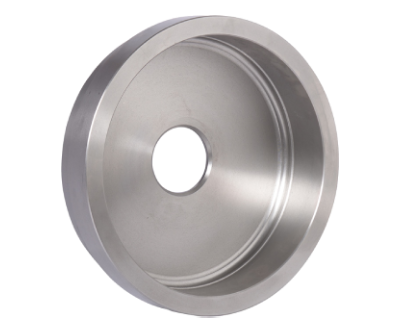
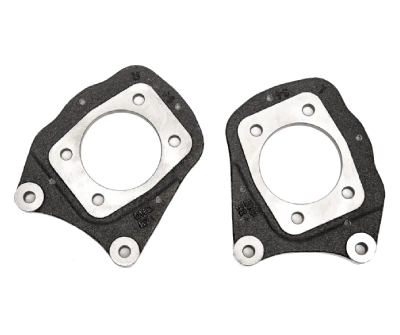
Brake Disc
Our foundry carefully controls the casting process—including material
chemistry, pouring
temperature, cooling rates, and heat treatment
to produce brake drums that maintain dimensional stability and surface
integrity under the thermal stress of automotive braking systems.
Ventilated Brake Discs for Automotive Applications
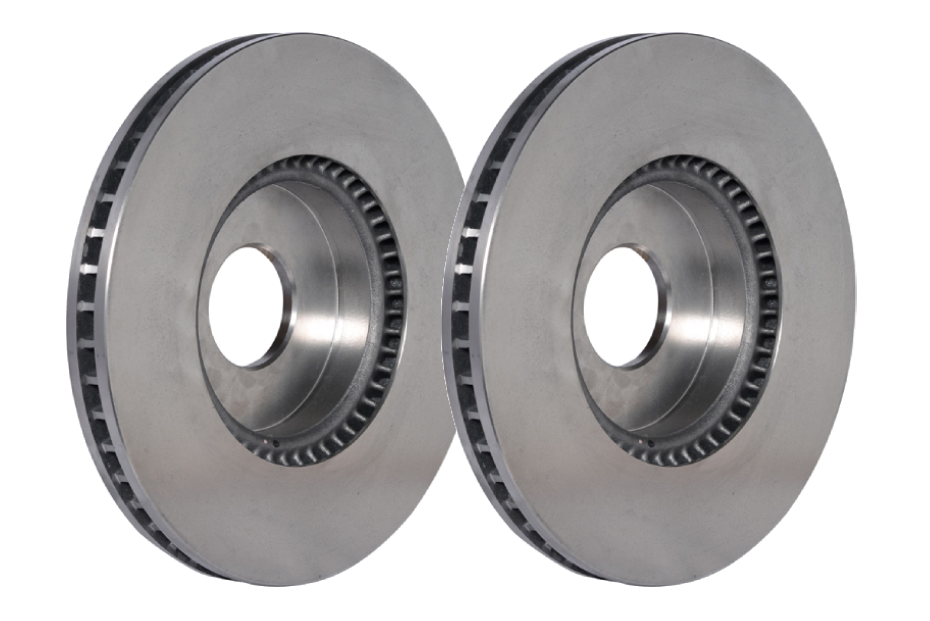
Brake discs operate on a straightforward principle: friction pads squeeze both sides of a rotating disc to generate stopping force. Unlike drum brakes, disc systems expose the friction surface to airflow, which helps manage heat. For cars operating in city traffic or highway driving, this thermal advantage improves braking performance and reliability. The ventilated design adds internal cooling channels between the disc faces, creating airflow that carries heat away from the braking surface.
We cast brake discs from grey iron grades selected for their thermal conductivity and resistance to heat cracking. The foundry process controls the graphite structure in the iron, which affects how the disc absorbs and releases heat during braking cycles. Vane geometry the internal cooling channels—is formed during casting and determines how effectively air moves through the disc. After casting, machining operations establish the friction surfaces, hub mounting, and wheel bolt pattern. Each disc is balanced and inspected for dimensional accuracy and braking performance before it is supplied to automotive manufacturers and aftermarket distributors.
Read MoreTechnical Specification
Size Range
200 mm to 300 mm diameter (8” to 12 ”)
Material of Construction
Flake Graphite Cast Iron
Specifications
MS 131-50 Grey Cast Iron for Automotive Brake Discs and Drums
MS 131-17 Grey Cast Iron for Automotive Brake Discs and Drums
Standard Compliance
Conforms to JIS G5501 (95) – FC 250
ASTM A247-67